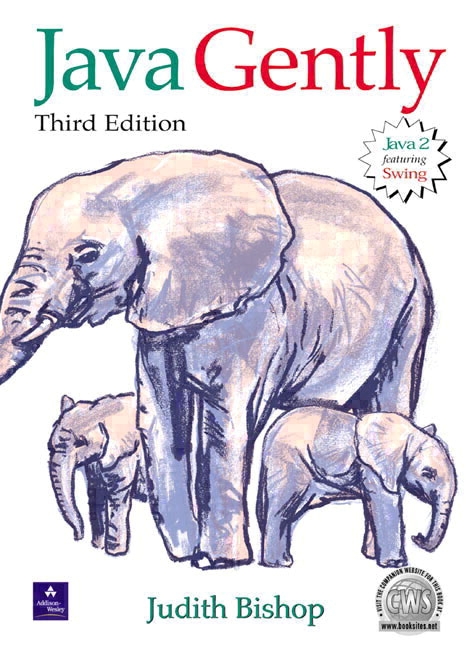
Java Gently teaches the reader how to program and how to do it in the best possible style in Java.In the process, it details the fundamental structures of the Java 2 language and most of its core libraries and utilities. The book covers object-orientation, software design, structured programming, graphical user interfacing, event-driven programming, networking, and an introduction to data structures. Java Gently gets students started on meaningful input/output in an object-oriented way without hiding basic concepts. Applets, multimedia, graphics, and networking are introduced as students encounter and can handle classes, objects, instantiation, and inheritance. The textbook's excellent pedagogy reinforces understanding and demonstrates good programming practice. The three kinds of diagrams include class, form, and algorithm diagrams. The fully worked examples have been carefully chosen to illustrate recently introduced concepts and solve real-world problems in a user-friendly manner. End of chapter multiple choice quizzes and problems allow students to test their comprehension of the material.
Buch
CHF 98.60
Produktdetails
Verlagsnummer:9780201710502
ISBN:978-0-201-71050-2
Produkttyp:Buch
Verlag:Pearson International
Erscheinungsdatum:13.12.2000
Seiten:688
Vorgängertitel:9780201342970
Auflage:3
Sprache:Englisch
Artikelbeschreibung
The third edition of Java Gently by Judith Bishop continues the successful approach that made earlier versions popular and has added improvements which will maintain its place as a worldwide bestseller. Java Gently teaches the reader how to program and how to do it in the best possible style in Java. In the process, it details the fundamental structures of the Java 2 language and most of its core libraries and utilities. The book covers object-orientation, software design, structured programming, graphical user interfacing, event-driven programming, networking, and an introduction to data structures. Java Gently gets students started on meaningful input/output in an object-oriented way without hiding basic concepts. Applets, multimedia, graphics, and networking are introduced as students encounter and can handle classes, objects, instantiation, and inheirtance. The textbook's excellent pedagogy reinforces understanding and demonstrates good programming practice. The three kinds of diagrams include class, form, and algorithm diagrams. The fully worked examples have been carefully chosen to illustrate recently introduced concepts and solve real-world problems in a user-friendly manner. End of chapter multiple choice quizzes and problems allow students to test their comprehension of the material.
Extras Online
Buch
CHF 98.60Inkl. MwSt.
Demnächst verfügbar - dieser Titel ist derzeit noch nicht lieferbar.